Selected Work

Zoteria

Tackling Hate Crime. Multiple award winning first-of-its-kind hate crime reporting app, ensuring safety and accessibility for the LGBTQ+ community.

Client
Vodafone Foundation
Services
Inclusive Design, Design Leadership, Product Design, User Research, Brand Development
Role
Head of Design
Team
UX Researcher, 2 x Product Designer, Brand Designer, Product Manager, Head of Design
Awards
BIMA Best Charity & Social Product, DMA Best Digital Product

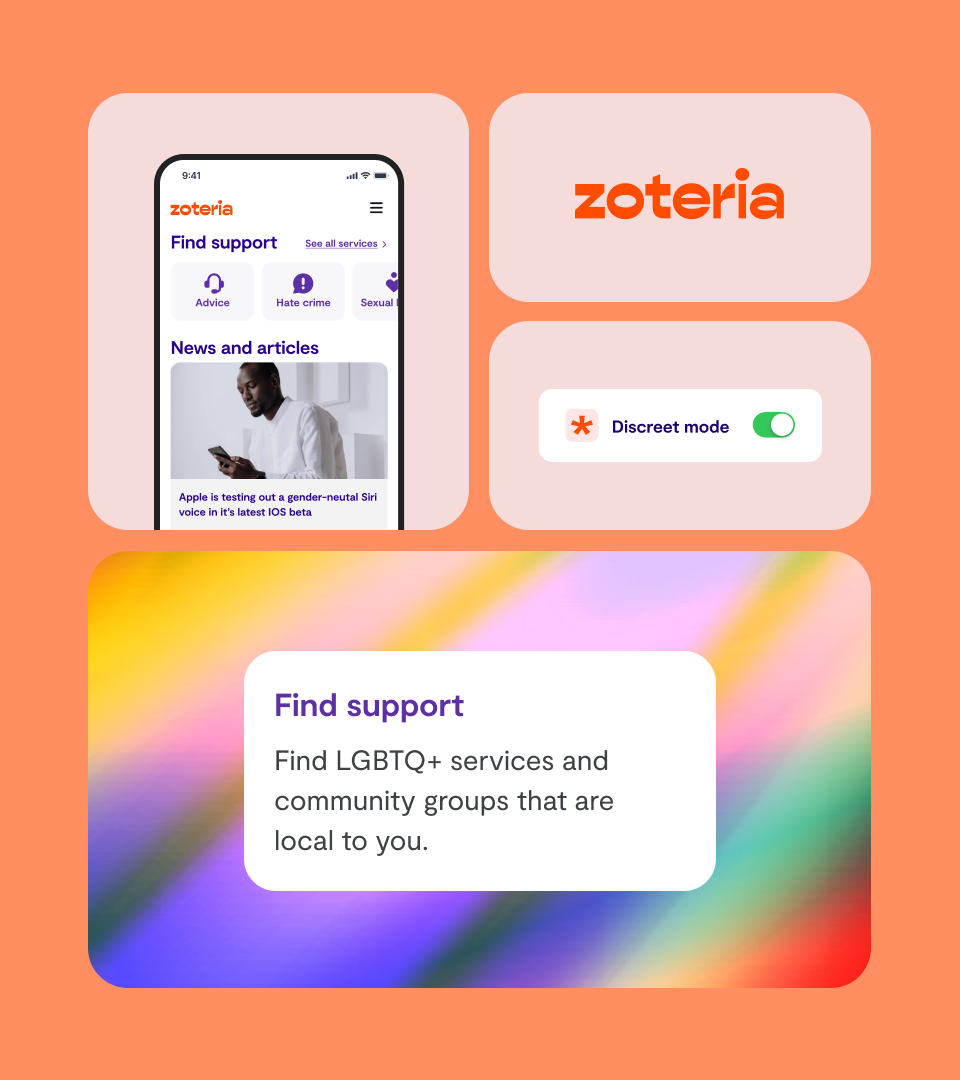
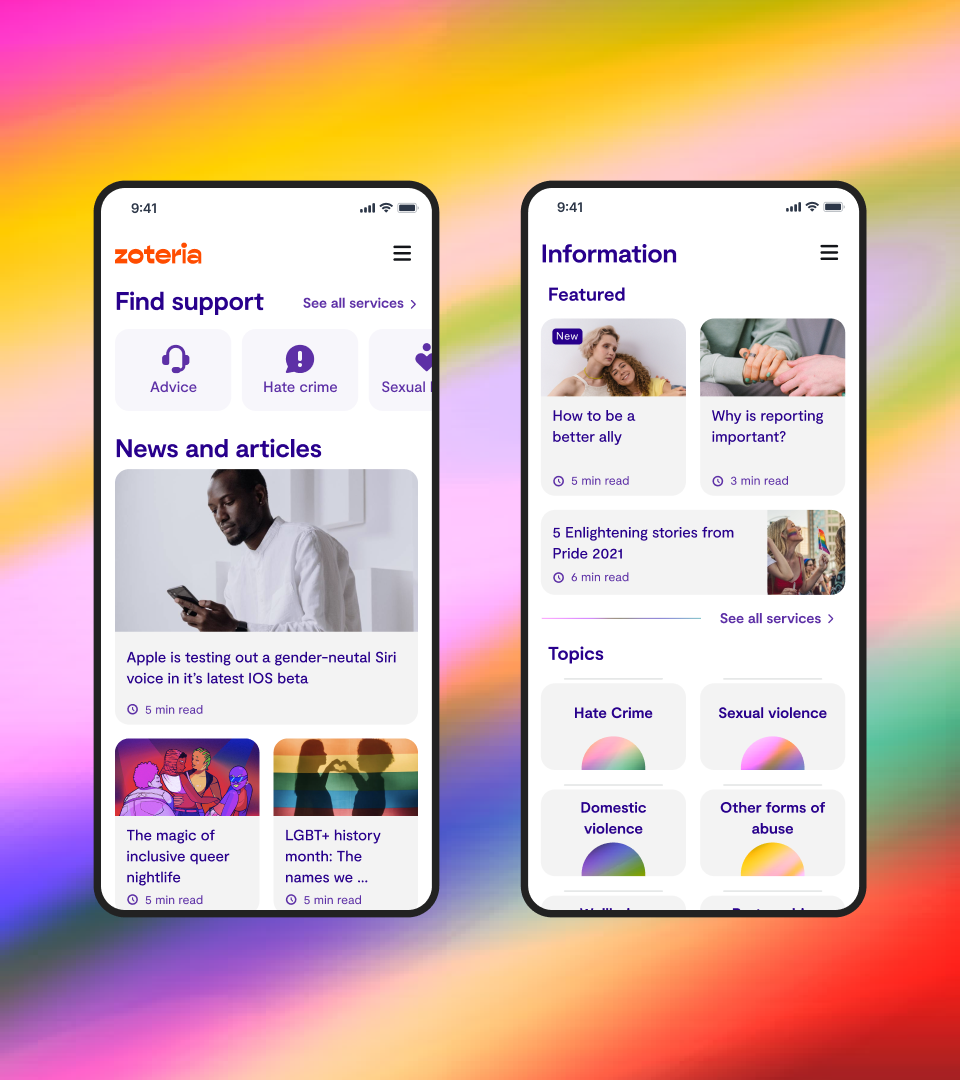
Zoteria is a mobile application designed to empower and support the LGBTQ+ community by providing a secure, accessible platform for reporting hate crimes, connecting users with relevant support organisations, and fostering community engagement.

As Head of Design, I led project definition, stakeholder alignment, workshop facilitation and overall product direction. I worked closely with Vodafone Foundation, Stonewall and Galop to shape the vision, build the delivery team and guide the project from discovery through launch.

Project Goals

  • Increase confidence in hate crime reporting
  • Build trust through privacy and anonymity
  • Create stronger connections between users and support organisations
  • Establish a scalable platform supporting future international expansion
Zoteria
Zoteria
Phase 1

Problem Shaping

This phase focused on laying the groundwork for the project by understanding the core problem space, aligning stakeholder expectations, and defining the product’s vision. Key decisions were made regarding target audiences, core features, and the tone of the product.
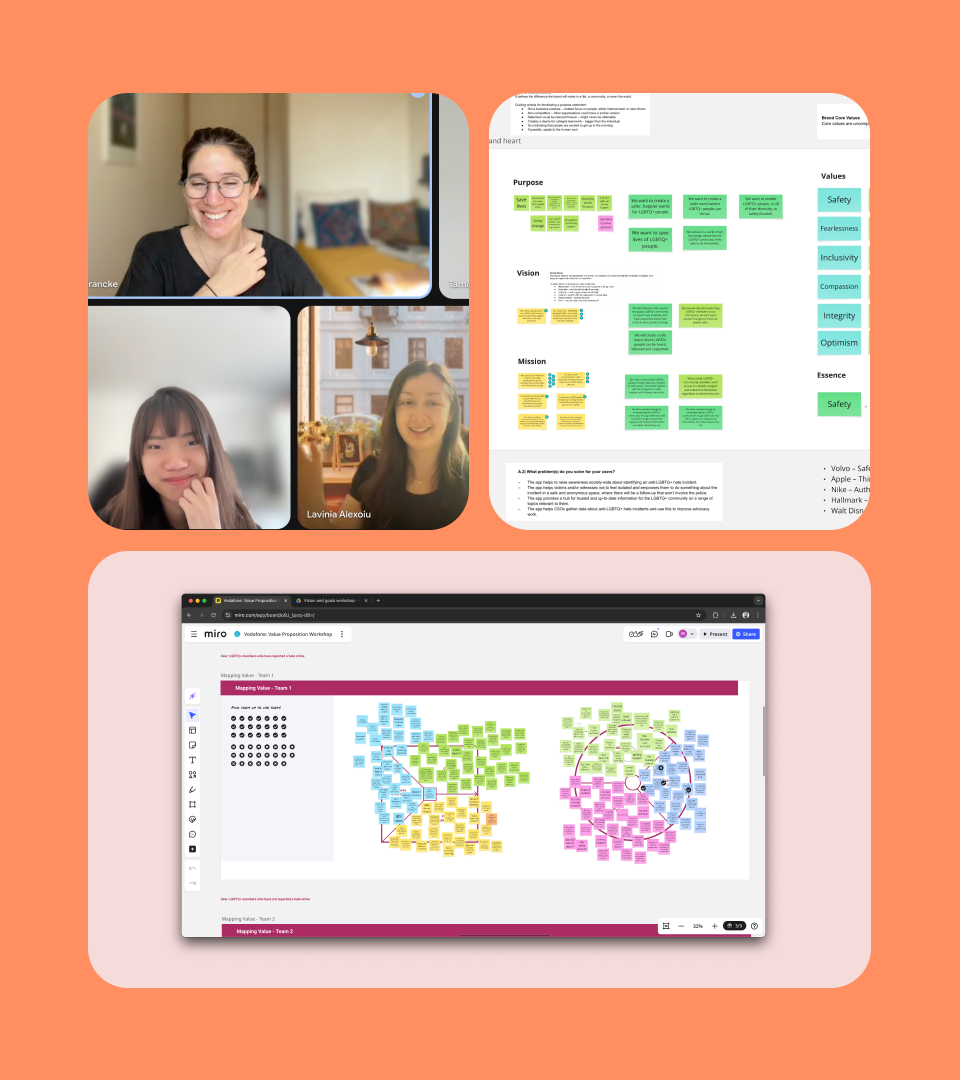
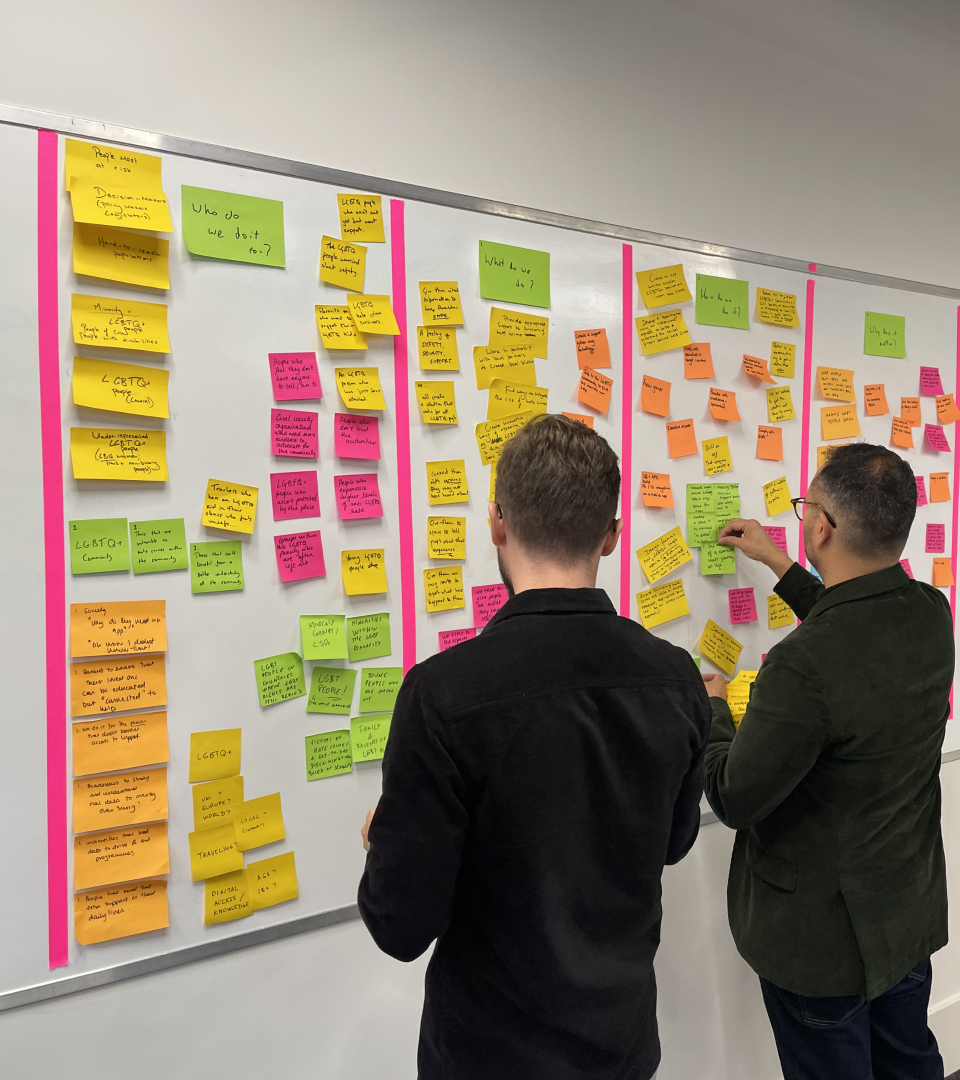
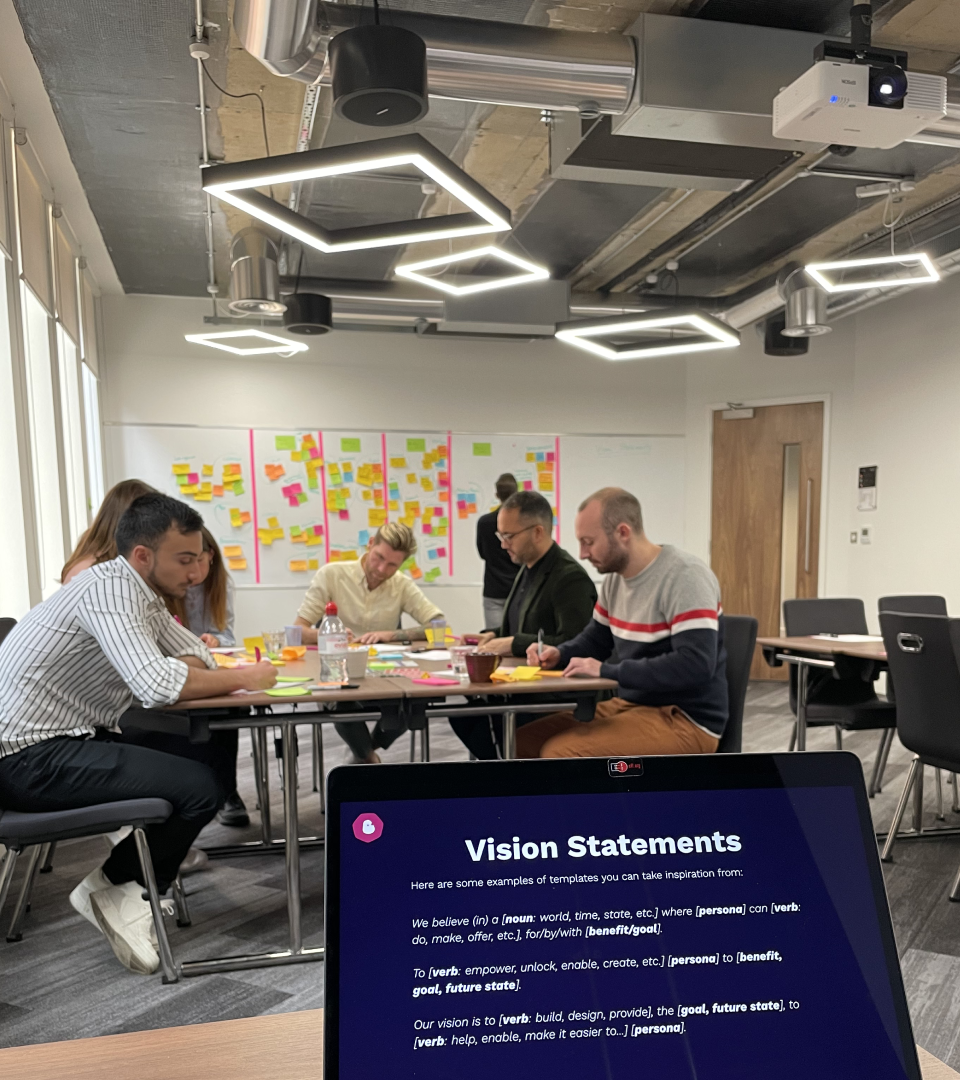
  • Product Vision Workshop: Explored the overarching goal of providing a safe, user-friendly hate crime reporting app. Stakeholder discussions revealed a gap in trust and accessibility, leading to a user-centric vision prioritizing safety and empowerment.
  • Product Goals Workshop: Set measurable goals such as user adoption rates, positive sentiment scores, and global scalability. Stakeholder consensus highlighted the importance of anonymized data sharing with local authorities.
  • Brand Personality Workshop: Defined Zoteria’s brand attributes: empathetic, empowering, and discreet. The need for a sensitive yet bold brand was driven by feedback highlighting emotional challenges victims face during reporting.
  • Brand Naming Workshop: Multiple names were considered; "Zoteria" was chosen for its connotation of protection and strength, aligning with user desires for safety and trust.
  • Value Proposition Workshop: Identified the core promise of Zoteria: providing a streamlined, non-judgmental reporting process and fostering community support. Personas were developed to represent different user journeys.
  • Hypothesis Crafting: Key hypotheses included: simplifying the reporting process increases reporting rates; anonymity features boost user trust; and providing community resources strengthens engagement.
  • Competitor Landscaping: Analysis of existing platforms revealed gaps in accessibility and user-friendly reporting experiences. This insight led to a focus on inclusive design and straightforward user flows.
Zoteria
Zoteria
Phase 2

Solutions Discovery

This phase aimed to translate insights from the discovery phase into tangible solutions. Workshops focused on user journey mapping, wireframing, and creative ideation.
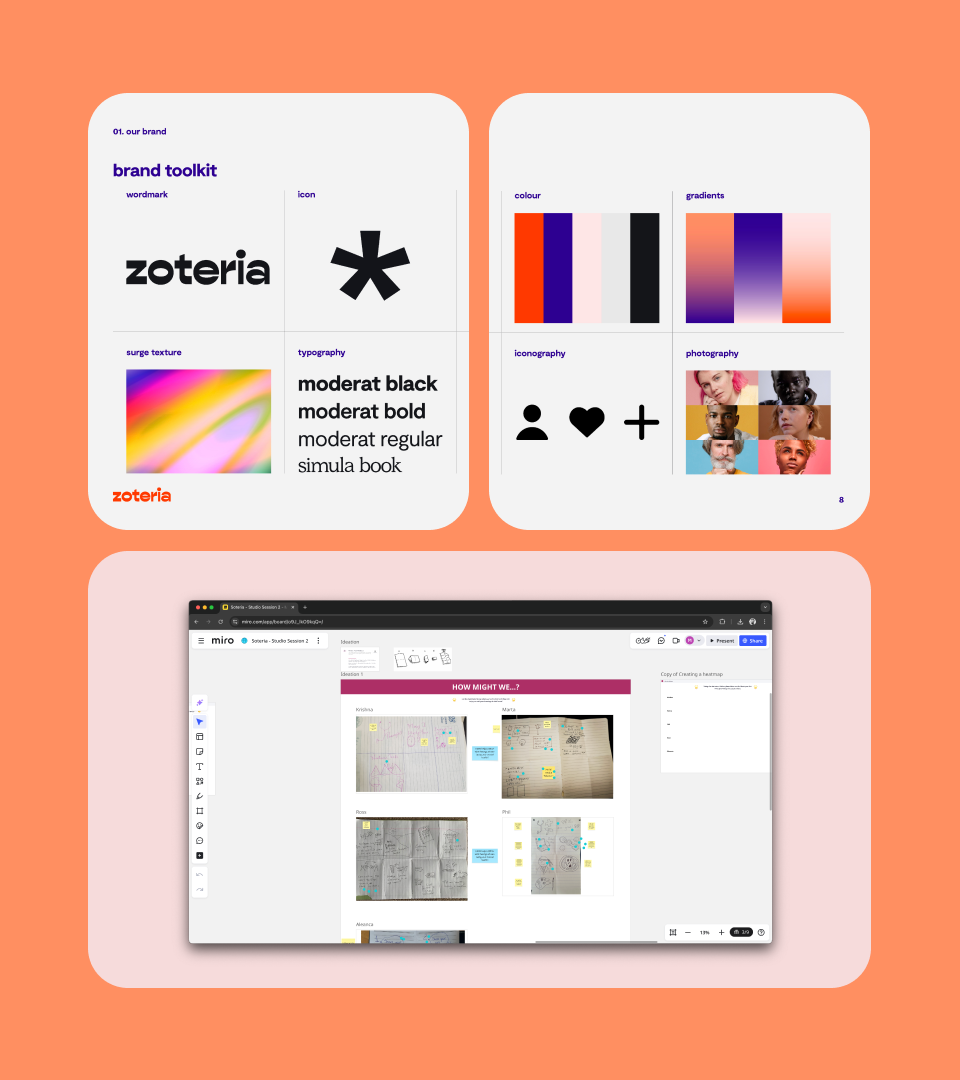
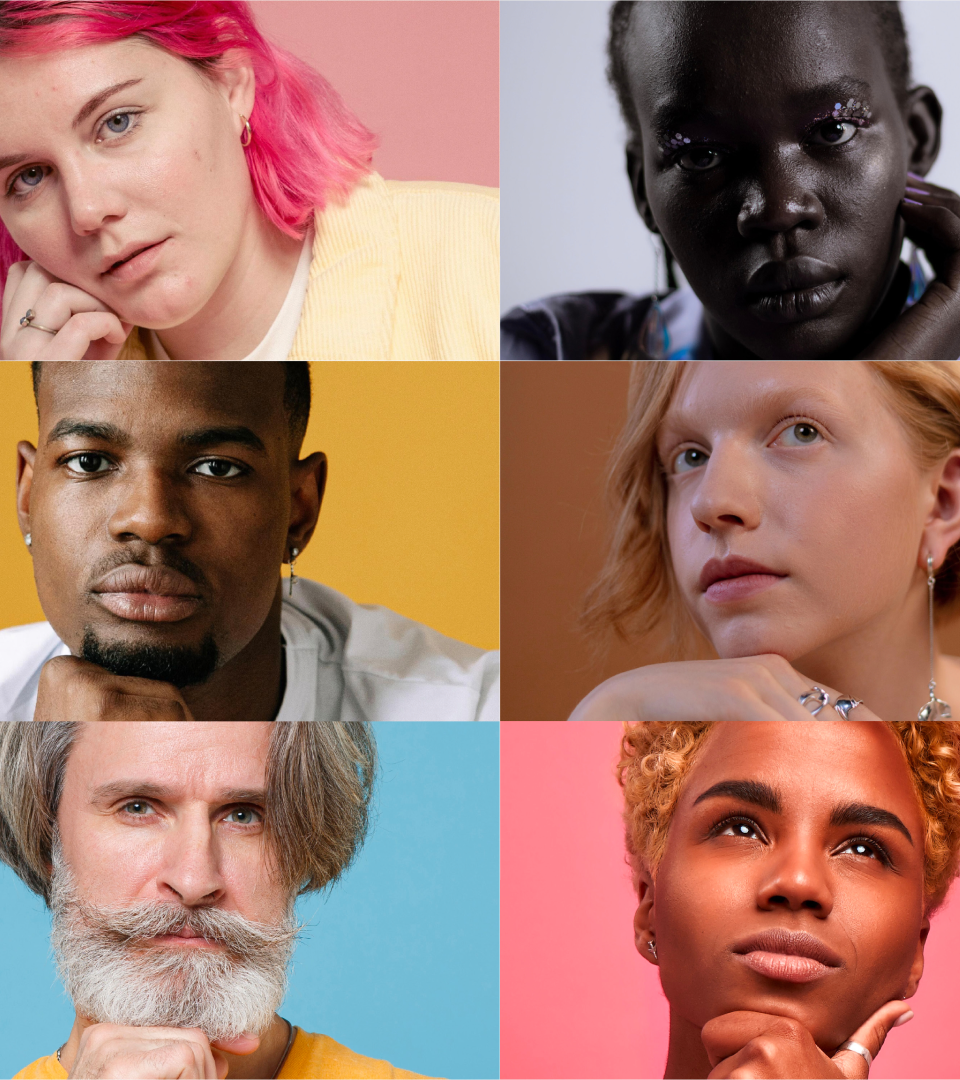
  • Studio Session: Co-creation sessions involving stakeholders and community representatives generated initial concepts. The idea for “Stealth Mode” emerged, addressing user concerns about privacy and discretion.
  • Lean User Flows: Created wireframes for critical user journeys, focusing on minimizing friction during sensitive reporting processes. Feedback influenced decisions to simplify form fields and introduce reassurance messaging.
  • Creative Direction: The visual language incorporated calming colours and rounded typography to convey safety and warmth. Design decisions balanced accessibility with cultural sensitivity, ensuring usability across diverse user groups.
Zoteria
Zoteria
Phase 3

Solution Validation

The solution validation phase focused on testing prototypes and refining features based on user feedback. Decisions were data-driven, ensuring that the product remained aligned with user needs.

Research Methods:

  • Community Interviews: Conducted with diverse members of the LGBTQ+ community.
  • CSO Workshops: Collaborations with organizations like Galop and Aleanca.
  • Surveys: Reached over 300 respondents across the UK.
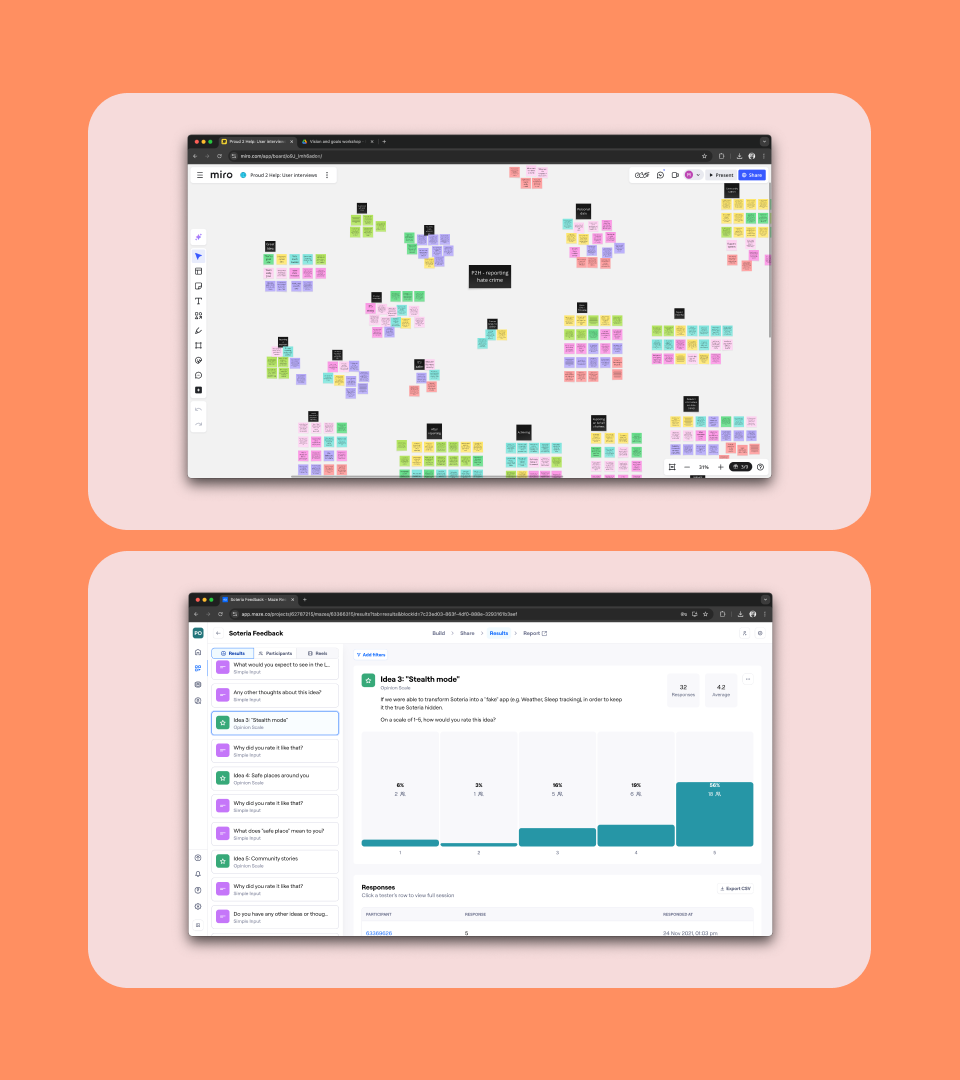
  • Prototype Testing: Evaluative research using Maze to test app functionality and user flow.

Key Insights:

  • Privacy Concerns: Users prioritized anonymity and data security.
  • Reporting Experience: A need for a warm, reassuring tone during reporting processes.
  • Feature Desirability: Strong preference for features like Stealth Mode and Safe Spaces directories.
  • Community Engagement: Users valued local event listings and peer support features.
Zoteria
Zoteria
Phase 4

Agile Design Delivery

This phase emphasized incremental delivery and continuous validation, ensuring the design remained user-focused and scalable.
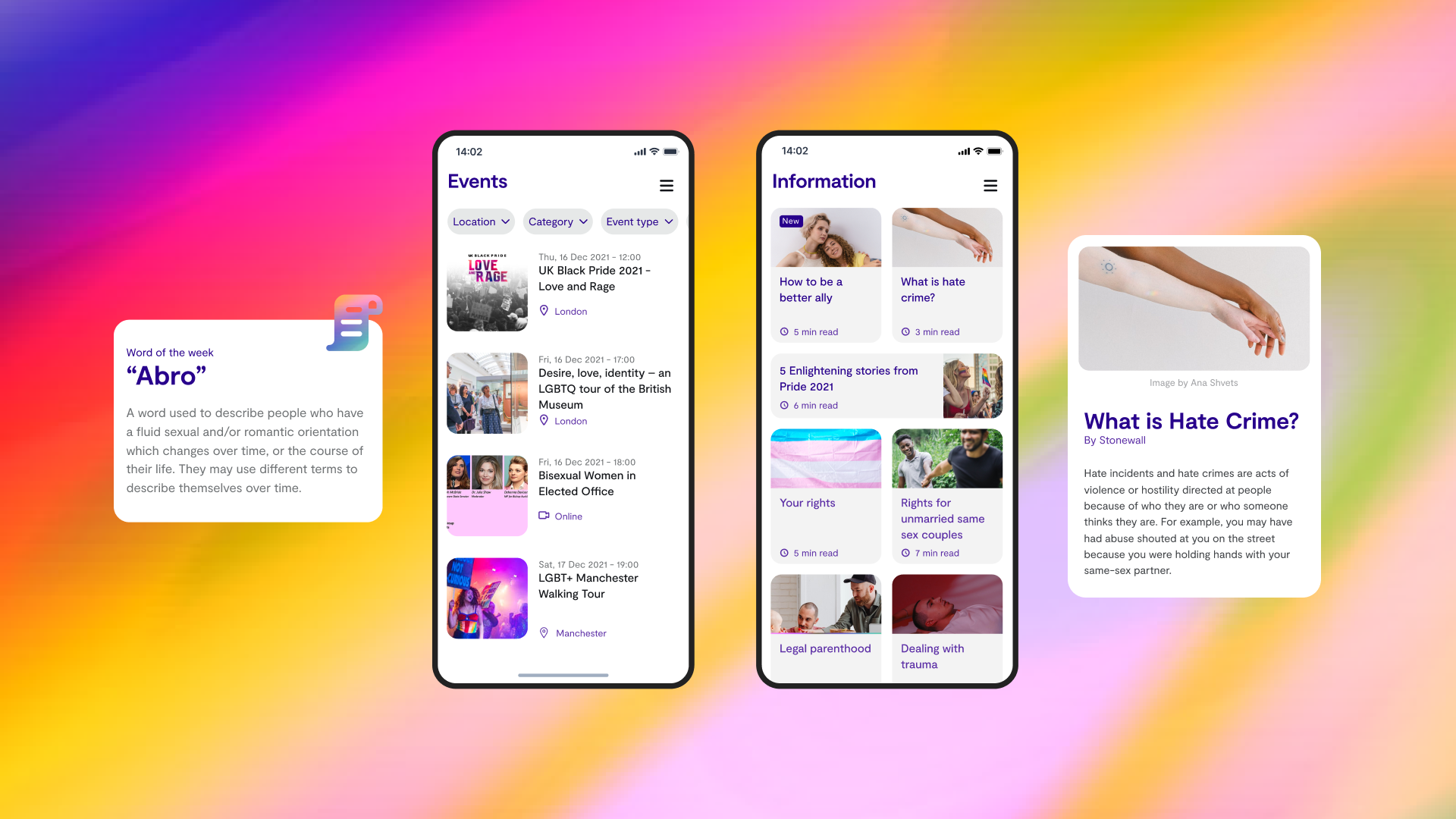
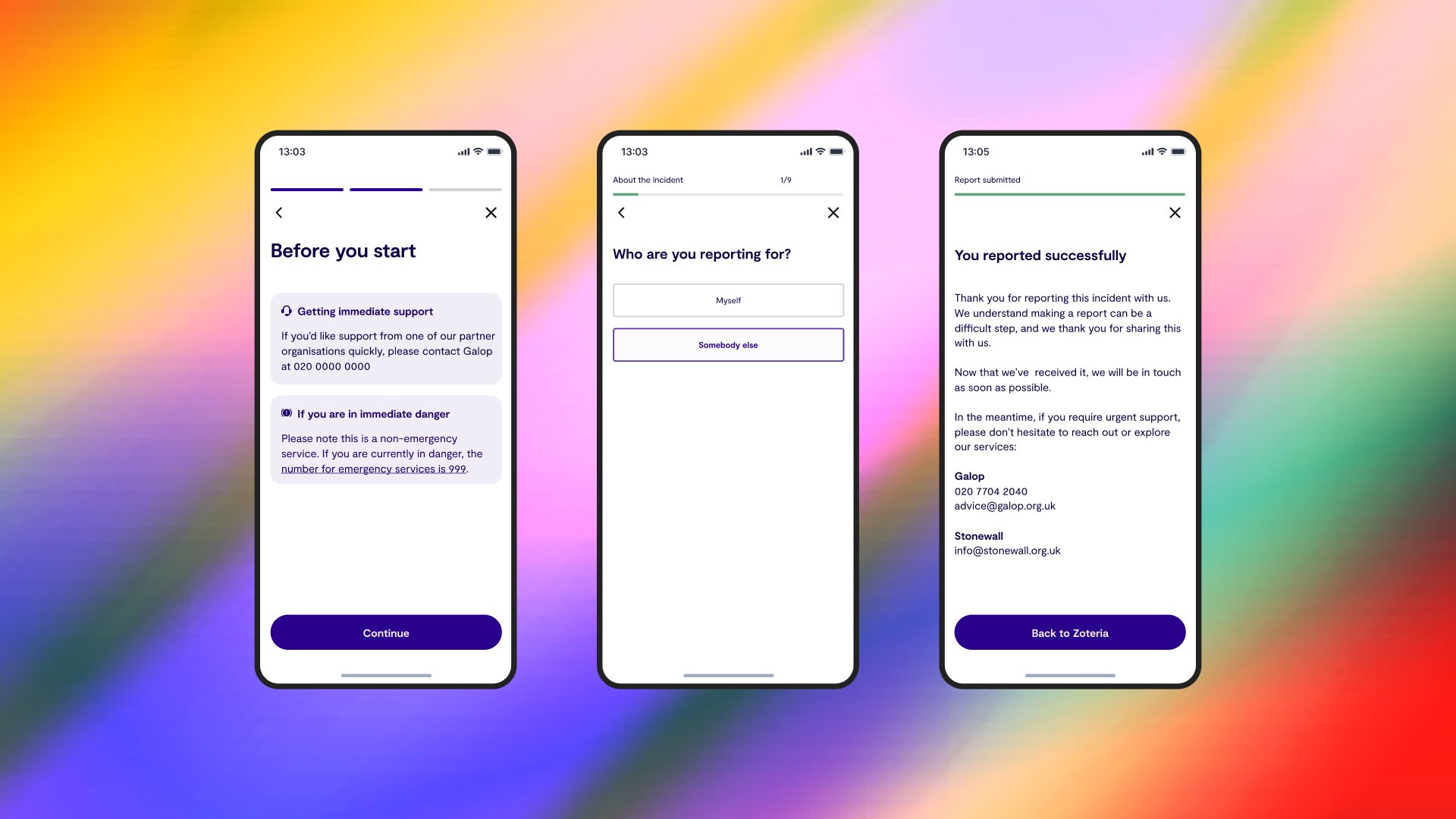
  • Brand Toolkit Creation: Finalised brand guidelines encompassing tone of voice, visual identity, and interaction principles. The toolkit ensured consistency across all user touch points.
  • Agile Design Delivery: Implemented an iterative approach, delivering design elements in sprints. User feedback from each sprint informed adjustments, such as refining navigation patterns and enhancing accessibility.
  • Design System: Developed a scalable design system supporting future expansion. It included reusable components, accessibility standards, and localization capabilities for international markets.

IMPACT

20,000 downloads within the first few months post-launch. Achieved a 96% positive sentiment score among users. Plans underway for rollout in key global markets. Strengthened community trust, with feedback highlighting the app's role in fostering safer environments. Secured major industry awards, including BIMA Best Charity & Social Product and DMA Best Digital Product.

Final thoughts

The Zoteria project showcases the power of inclusive, user-centered design in addressing social challenges. By combining thoughtful research, iterative design, and stakeholder collaboration, Zoteria not only achieved its goal of making hate crime reporting accessible but also fostered a sense of community and empowerment within the LGBTQ+ community.

Explore My Work

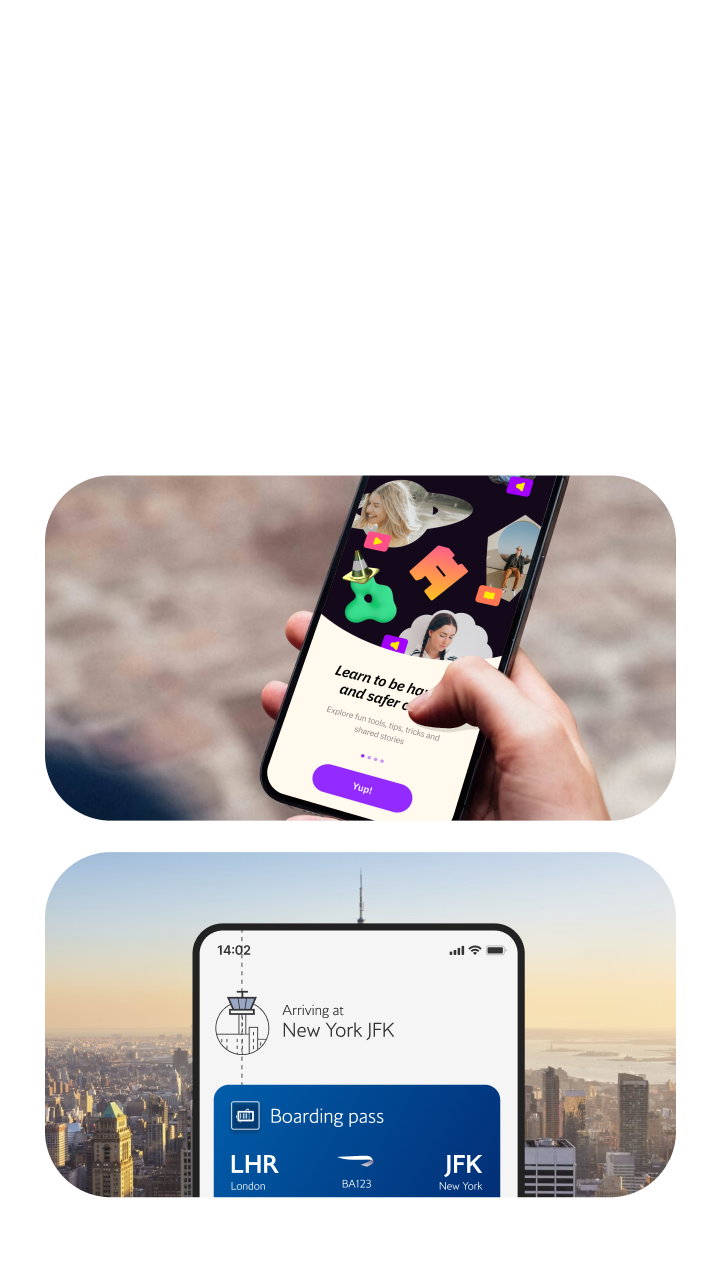
Looking to dive deeper into my projects? Check out my Works Page to explore case studies on the impactful design solutions I’ve created across industries.

See my selected projects
ArrowArrow